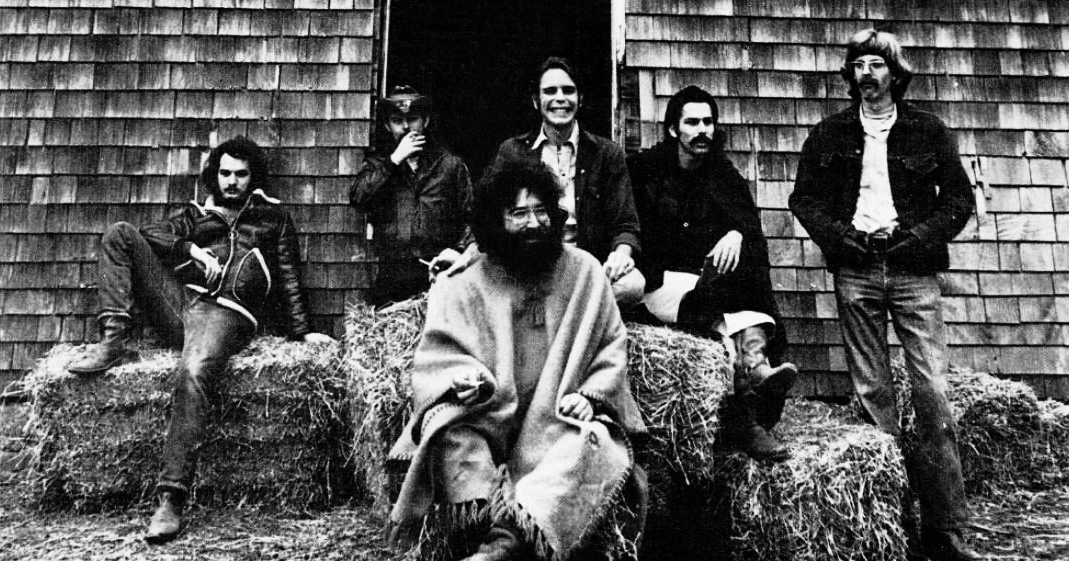
The Grateful Dead
.png)
Grateful Dead [Public domain], via Wikimedia Commons

Grateful Dead [Public domain], via Wikimedia Commons

Located in Veneta, Oregon, about 15 miles west of Eugene, The Oregon Country Fair has been delighting visitors since 1969. A mostly volunteer built event, visitors are treated to music, food, crafts and performances, demonstrating what it means to live joyously, and artfully. The Oregon Country Fair has been a beloved Pacific Northwest tradition for more than half a century, blending counterculture roots with the spirit of creativity, community, and celebration.
The fair began in 1969 as a fundraising event for an alternative school near Eugene, Oregon. What started as a small, free-spirited gathering quickly grew into a full cultural movement. In the 1970s, the Fair became a hub for artisans, performers, activists, and dreamers who were building new ideas about art, sustainability, and community living. For many, it offered a space to explore music, theater, handcrafted goods, and communal values during a time when the region’s counterculture scene was thriving.
The nonprofit Oregon Country Fair purchased wetland/acreage in the early 1980s and later expanded/managed the parcel into the site it owns today. The family of Ken Kesey — through their connections (e.g. to the Grateful Dead benefit concert) — played a crucial role in helping raise funds that enabled the land purchase.
The Fair eventually moved onto the Veneta site in the 1970s, operated there for years (renting acreage), then raised money — including from benefit concerts connected to Ken Kesey and the Grateful Dead — to help buy the property.
Over the decades, the Fair developed into a vibrant temporary village, complete with handcrafted booths, costumed performers, parades, drum circles, and winding forest paths styled like a magical realm. Long before environmentalism was mainstream, the Oregon Country Fair embraced recycling, composting, local foods, and a deep respect for nature. Many of the original performers and craftspeople returned year after year, turning the Fair into a multigenerational tradition. Families, artists, and volunteers helped build the iconic stages and structures that make the Fair feel like its own world—one that exists for only a few days each summer.
Today, the Oregon Country Fair continues to thrive as a three-day celebration held each July outside Veneta, Oregon. It attracts thousands of visitors who come for live music, vaudeville acts, parades, craft booths, imaginative costumes, and a welcoming atmosphere unlike any other festival. Modern technology and improved accessibility have made it easier for more people to participate, yet the Fair still maintains its handmade, community-run charm. While it honors its 1960s roots, the Fair remains a living, evolving experience—part performance, part marketplace, part community gathering, and entirely unique. For longtime fans and first-time visitors alike, the Oregon Country Fair is a joyful reminder of the power of creativity and collective spirit.
The story of OCF’s land acquisition is still a kind of communal rebellion and grassroots victory — but it’s one built by many hands, fundraisers, and community support, rather than by a single generous donation. The Fair’s success in purchasing the property allowed it to evolve from a rented gathering to a permanent institution with stewardship over wetlands, forest, and riverfront land — a meaningful commitment to land conservation and sustainability. The efforts to preserve the land show up today in the Fair’s land-management policies, commitment to wetlands & wildlife habitat, and dedication to “green zones” and managed growth rather than commercial exploitation.
Over the decades, the Fair developed into a vibrant temporary village, complete with handcrafted booths, costumed performers, parades, drum circles, and winding forest paths styled like a magical realm. Long before environmentalism was mainstream, the Oregon Country Fair embraced recycling, composting, local foods, and a deep respect for nature. Many of the original performers and craftspeople returned year after year, turning the Fair into a multigenerational tradition. Families, artists, and volunteers helped build the iconic stages and structures that make the Fair feel like its own world—one that exists for only a few days each summer.
Today, the Oregon Country Fair continues to thrive as a three-day celebration held each July outside Veneta, Oregon. It attracts thousands of visitors who come for live music, vaudeville acts, parades, craft booths, imaginative costumes, and a welcoming atmosphere unlike any other festival. Modern technology and improved accessibility have made it easier for more people to participate, yet the Fair still maintains its handmade, community-run charm. While it honors its 1960s roots, the Fair remains a living, evolving experience—part performance, part marketplace, part community gathering, and entirely unique. For longtime fans and first-time visitors alike, the Oregon Country Fair is a joyful reminder of the power of creativity and collective spirit.
The story of OCF’s land acquisition is still a kind of communal rebellion and grassroots victory — but it’s one built by many hands, fundraisers, and community support, rather than by a single generous donation. The Fair’s success in purchasing the property allowed it to evolve from a rented gathering to a permanent institution with stewardship over wetlands, forest, and riverfront land — a meaningful commitment to land conservation and sustainability. The efforts to preserve the land show up today in the Fair’s land-management policies, commitment to wetlands & wildlife habitat, and dedication to “green zones” and managed growth rather than commercial exploitation.

I love tiny houses. I LIVE in a tiny house, 416 square feet, right now! I’ve lived in many curious dwellings like a 16-foot airstream trailer without electricity, a Quonset hut, a pup tent for three months in a meadow near Mt. Shasta, a single-wide mobile home and now a studio condo in a nearly 100-year-old building. I GET SMALL! I have also lived in big suburban houses, smaller suburban houses, you get the idea. I prefer smallish.
I LIVE in a tiny house, 416 square feet, right now! I’ve lived in many curious dwellings like a 16-foot airstream trailer without electricity, a Quonset hut, a pup tent for three months in a meadow near Mt. Shasta, a single-wide mobile home and now a studio condo in a nearly 100-year-old building. I GET SMALL! I have also lived in big suburban houses, smaller suburban houses, you get the idea. I prefer smallish.
I love the tiny house movement and all it represents in regard to downsizing, consuming less everything, being more conscious about what you bring into your home or don’t due to space limitations.
The one thing that troubles me about all of the tiny house designs I’ve seen and granted, I’ve not seen that many, but most every photo or plan for a tiny house includes a loft and a ladder to access that loft, and THAT’s the part I’m not sure about.
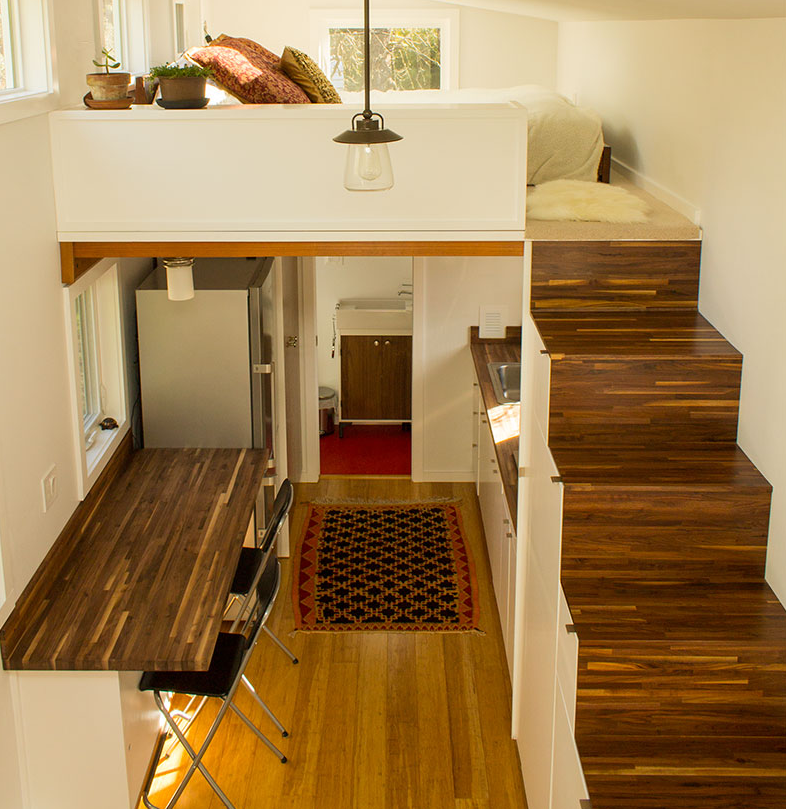
Pad Tiny Houses has solved that with the Hikari Tiny House. Coming in at 184 square feet downstairs, with actual stairs instead of a ladder and sleeping up or downstairs, I think the Hikari House could be an answer for a shared senior community.
All that aside, I am so excited that in Portland, Oregon we have a wonderful Tiny House movement. Classes can be taken to teach you how to build your own tiny house. Watch this video by Pad Tiny Houses. Dee Williams and Joan Grim are the instructors who lead this weekend workshop, and there are other workshops that involve a tiny house actually being built.

From Facebook to politics, and television, does it seem like facts don’t matter anymore?
Do you remember when paying for things in cash wasn’t suspicious and asking questions wasn’t considered rude and combative? I do, and I miss them.
Have you ever had anyone get angry with you because you asked them where they heard something or if they could back it up?
Most of us can’t back it up, myself included. A good friend who is a journalist and fact finding genius has re-trained me to be more diligent in what I repeat as fact or truth by challenging me all the time. Fortunately, I like the challenge, but I find many people don’t like being asked on what they base their opinions or where they got their “facts.”
Another new barrier to critical thinking is the internet. I am guilty on occasion of “Liking” or sharing a web page that prints facts about science, celebrities, or politics, but provides no links or references to cite where the information they are authoritatively writing about came from.
Guilty, but I’m changing. I’m working on slowing down and before I “Like” someone’s post or share an article, I look for references that I can check. It all takes so much time, so I have to ask is this worth the time, and if the answer is no I move on.
FactCheck looks at the information we see in the media and checks the facts for us. They take the content of political speeches and commentary and fact check them. You can even submit your own request for them to fact check an issue, maybe the one you bet $20 on.
And example might look like this:
In a country that seems to value how you feel and how you look, over facts and reality, it worries me. That’s why I encourage you to pause before you Like and consider that even those with similar opinions and politics are just as capable to of posting misinformation Sometimes, ironically in response to an unsubstantiated opposing opinion or “facts.”


Recent Comments